Personalized Comic Book Gift: The Present Couples Are Giving in 2026
The comic book gift went from novelty to the present people actually plan for. Here is why it works on a partner, what separates a good one from a gimmick, and how to make yours before the date.
myComics Team8 min read
Quick answer
- A personalized comic book gift is a printed or digital comic in which the recipient is the main character, drawn from their own photographs rather than picked from a template.
- It trends for partners because it is the rare gift that is specific — it retells a story only the two of you have, instead of signalling generic affection.
- The work is front-loaded and small: three to eight clear photos of each person and one sentence describing the story. The story itself unfolds from choices you make.
- The result is a stylized likeness, not a portrait. Judge it the way you would judge a caricature artist at a good stall, not a passport photo.
- If you want it printed, work backwards from the date and leave room for one reprint. Print is the constraint, not the making.
There is a particular kind of gift panic that happens about ten days out. You have already given the watch, the weekend away, the good coffee setup. The things that are left are either too small to mean anything or too large to mean anything specific. What you actually want is a gift that proves you were paying attention.
That is the gap a personalized comic book gift walked into, and it is why the format went from novelty to something people now plan for rather than stumble on.
What is a personalized comic book gift, exactly?
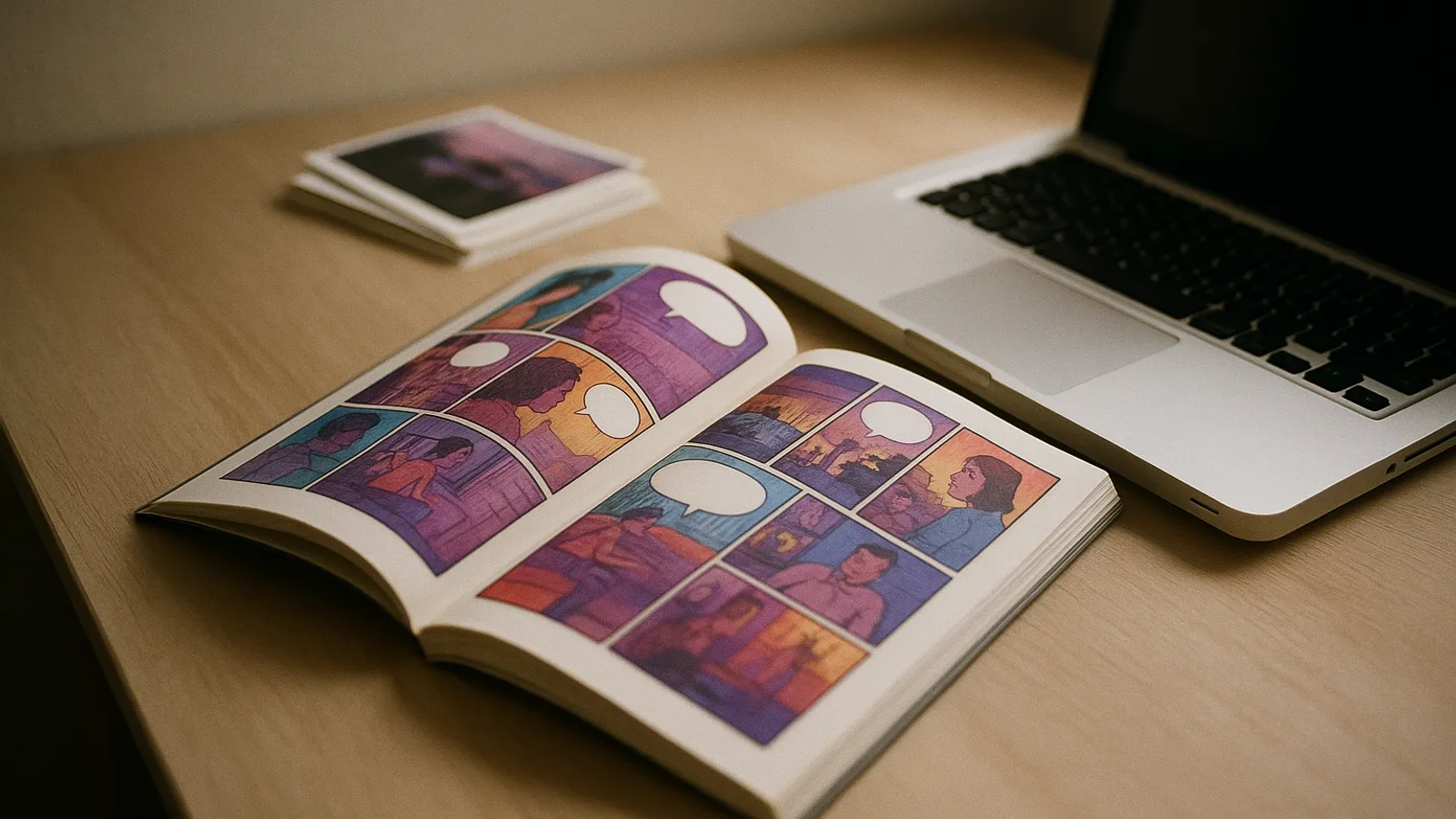
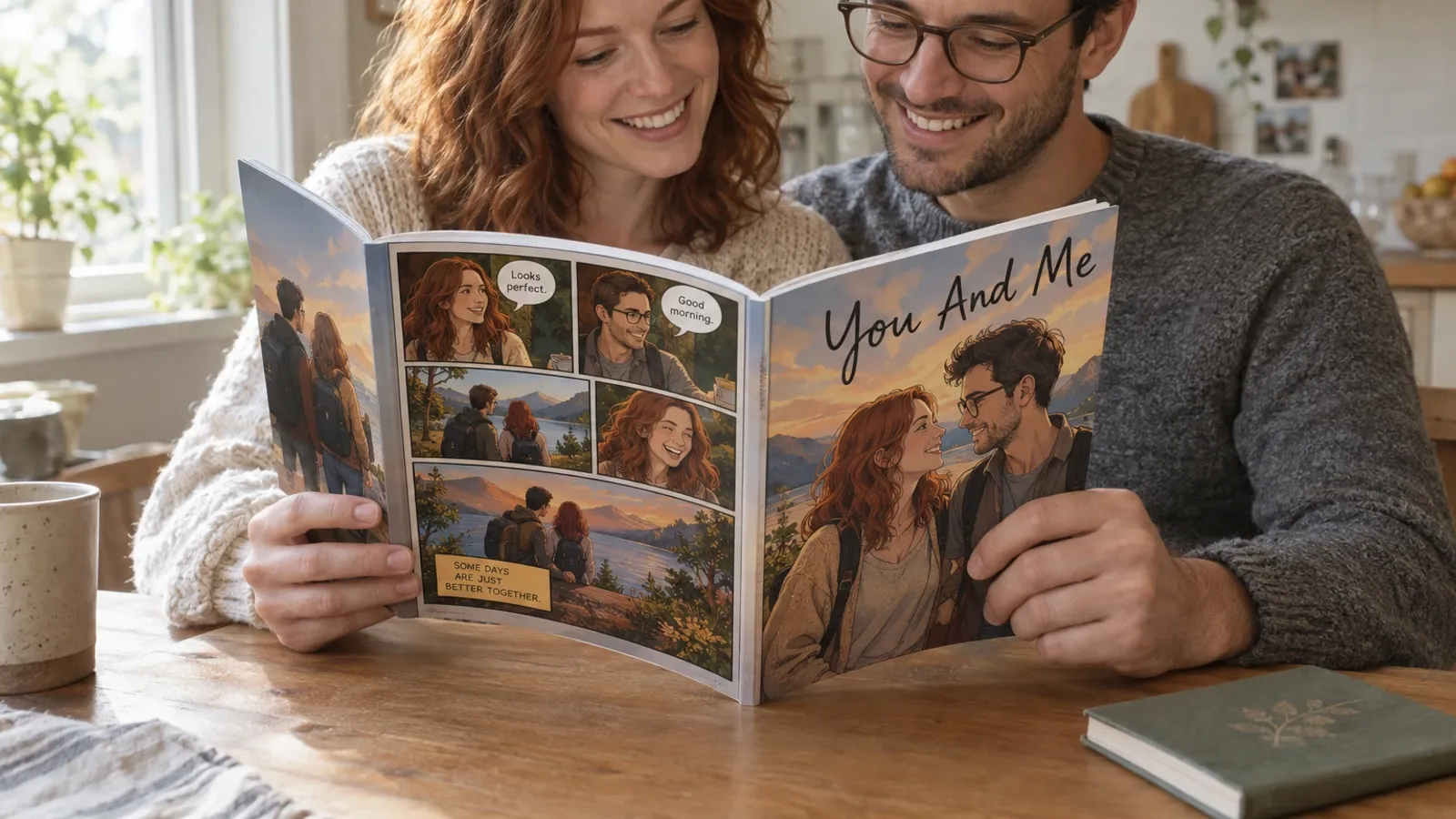
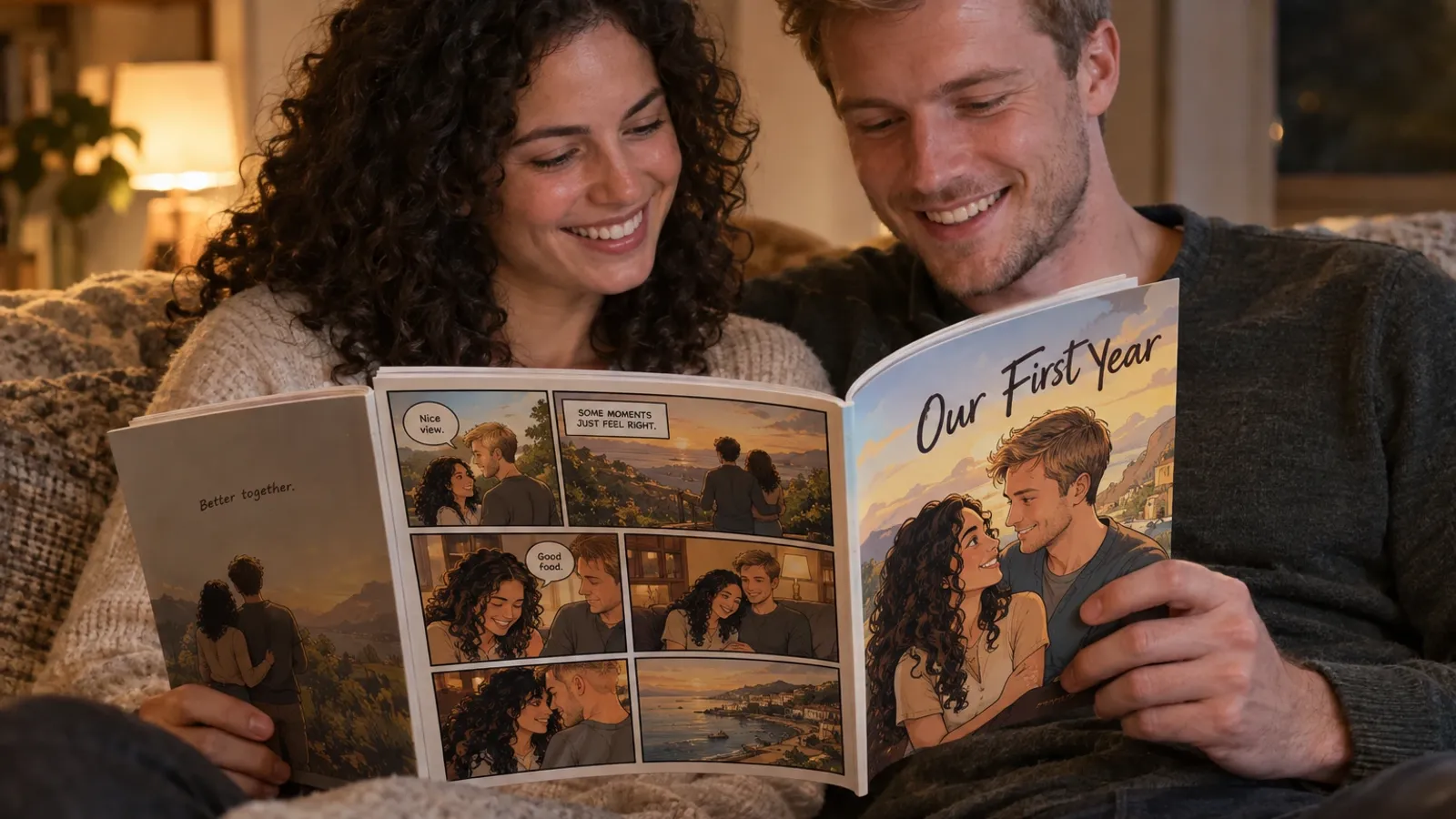
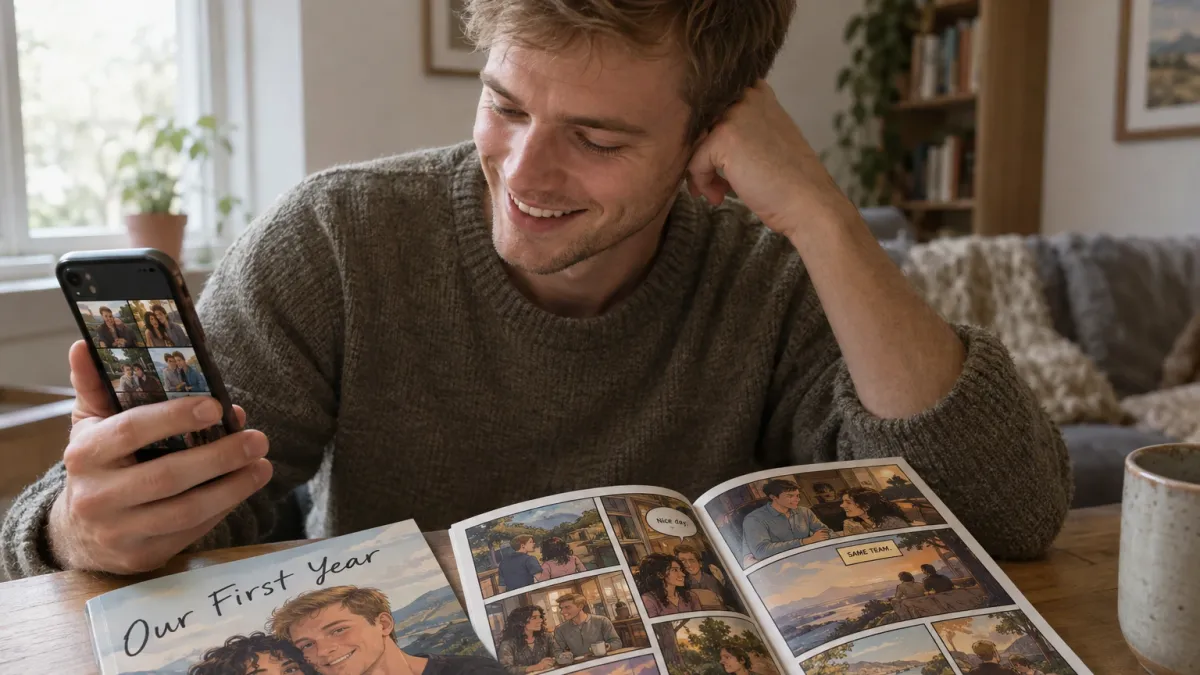
It is a comic — printed, or read on a screen, or both — in which the person receiving it is the main character.
The word doing the work is personalized, because the gift market uses it loosely. A mug with a name on it is personalized. A children’s book with the blanks filled in is personalized. Those are template products: the object is fixed and your detail is dropped into a slot.
A personalized comic book works the other way round. With myComics.ai you upload three to eight photographs of each person, and the product builds a reusable comic character out of them — a face that holds its likeness across every panel while the pose, the angle, the lighting and the scene all change. Then you give the story a premise, and the pages unfold through choices you make as you go. Nobody picks a jawline from a dropdown. The likeness comes from the photos, and the story comes from your life.
The finished book can be read online, exported as a PDF, or ordered printed. That last option is the one most people want for a partner, because a gift you can hand over is different from a link you can send.
Why did comic book gifts become the 2026 trend for partners?
Trends in gifting are usually explained badly — “people want experiences now” — so it is worth being concrete about what actually changed.
The hard part got easier. Drawing one person once has never been difficult; a caricature artist at a market does it in four minutes. Drawing the same person forty times, from different angles, and having them stay recognisably themselves — that was the expensive part, the thing that made a custom comic a commission with a waiting list. That constraint is what lifted, and the entire category followed it.
Gifts drifted toward stories. The shift away from objects and toward things that carry meaning has been running for years. A comic is an unusual case because it is both. It sits on a shelf like an object and it retells a story like a photo album that finally learned to narrate.
Photos stopped being enough. Everyone has ten thousand pictures of their relationship and looks at none of them. A comic is what happens when you take twelve of them and turn them into something with a beginning and an end. The difference between an archive and a story is editing, and a comic forces the edit.
The specific beats the expensive. Nobody misreads a personalized comic. It cannot be bought in a panic on the way home, and the recipient knows that instantly. That legibility is most of why it works on a partner — the gift carries visible evidence of effort, which is the thing people are actually trying to communicate.
Who is this gift actually right for?
The honest answer is: not everyone, and the failure cases are predictable.
It is right when you can finish this sentence in one line: this comic is about the time we…. A premise is the whole requirement. “The summer we drove to the coast and the car died twice.” “How we met, properly told, including the part you always get wrong.” “The year you did the hard thing and nobody else saw it.” Any of those is enough to start.
It is right when you have usable photographs of them. Not professional ones — clear ones.
It is right when the person enjoys being made a bit of a hero. Some people are delighted by it and some find it exposing, and you already know which one you live with.
It is a poor fit in three cases. If the relationship is new enough that there is no shared story yet, the comic will reach for material it does not have. If your only pictures of them are group shots from across a room, the likeness will suffer and no amount of style choice will rescue it. And if what you want to say is an accumulation of small affections rather than a single narrative — all the little things, no particular plot — then a list format says that more directly than a story does, which is the case we make in our comparison with reasons-why books.
What do you actually have to do to make one?
Less than people expect, and the effort is front-loaded rather than spread out.
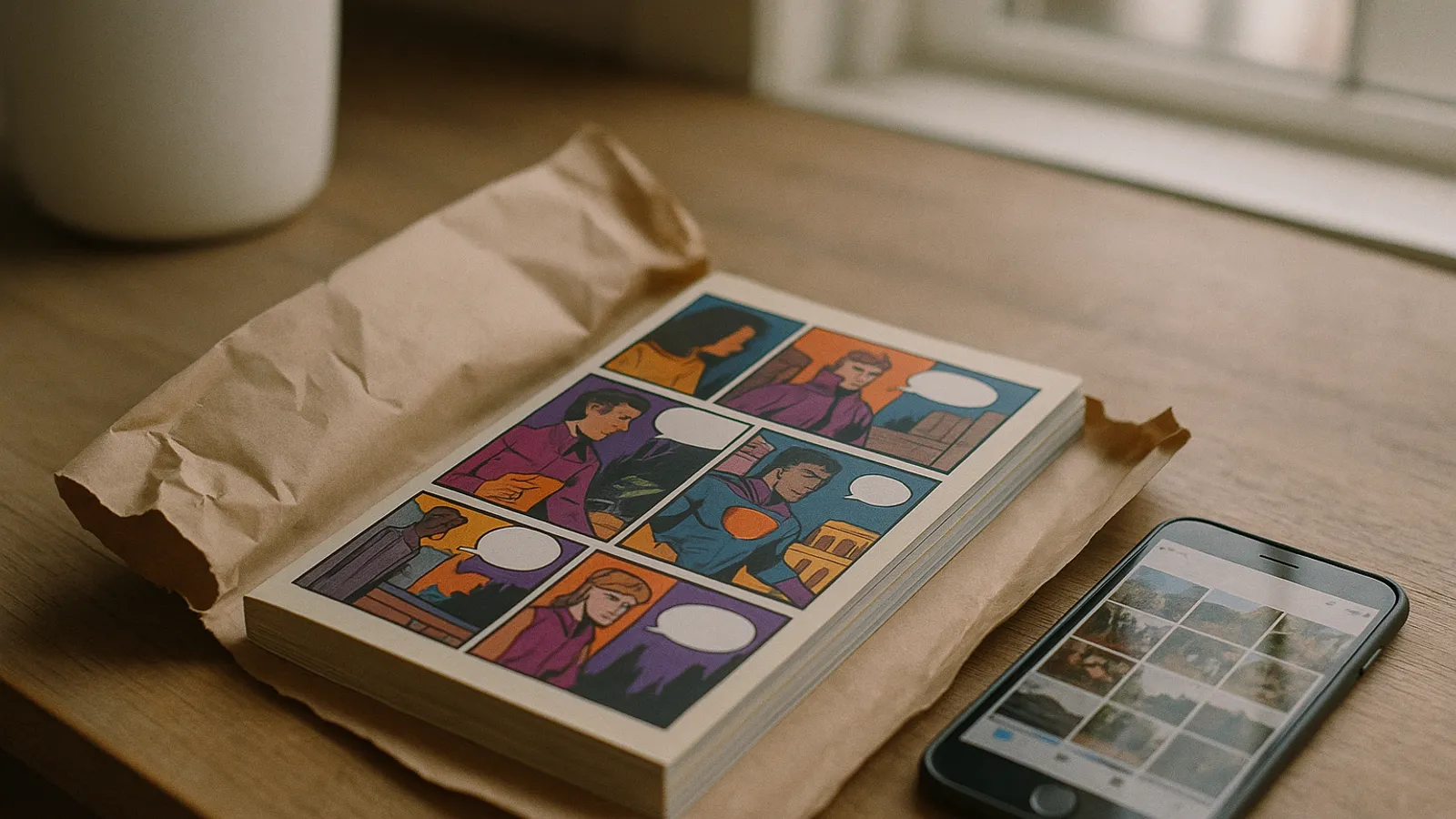
Pick the photos. Four careful minutes. Three to eight per person. Faces clearly visible, varied angles rather than eight versions of the same selfie, even light, no heavy beauty filters, nothing tiny and pixelated. This is the step that decides the outcome, and it is the step people rush. There is a full walkthrough in how to turn your photos into a comic, and it is worth reading before you upload rather than after you are disappointed.
Check the character before you build anything. Generate the character and look at it. This is the single most useful habit in the whole process: you learn more in ten seconds of looking at your partner’s face rendered in a style than from any amount of reading about tools. If it is not right, change the photos, not the settings. Image to comic is the short version of this step if you want to try it in isolation first.
Choose a style that fits the relationship, not your taste. Superhero reads as celebration and suits milestones — anniversaries, a big year, a proposal. Manga carries sincerity and comedy in the same breath, which is why it survives soppy material that would sink another style. Noir is very funny when the subject is deadpan, and quietly romantic when it is not. Cartoon is warm, and it is the safe choice when kids or pets are in the story too. The style is part of what the gift says.
Give it a premise and steer. One sentence to start. From there the story unfolds through choices, so you are directing rather than writing from a blank page. Expect an evening, not a project.
Decide the format early. Screen, PDF, or printed book. Print is the option that makes it feel like a gift, and it is also the one with a delivery step you do not control.

What separates a comic that lands from one that feels like a gimmick?
Four things, and only one of them is about the tool.
Recognition, not resemblance. The gift works the moment the recipient sees themselves rather than someone with their hair colour. That is why the character-from-photos step matters so much more than the number of style options. Faces are the one visual task humans are brilliant at, and a likeness that holds across a dozen panels reads as effort in a way that a matched hair colour never will. Be realistic about what you are getting, though: it is a stylized likeness, closer to what a good caricature artist captures than to a photograph. Comic art abstracts fine detail on purpose.
A real premise instead of a compliment. “You are amazing” is not a story. “The night the flight was cancelled” is. The second one has a beginning, a problem and an ending, and those are what make someone read to the last page instead of flipping through politely.
Specific detail. The flat with the broken radiator. The phrase they always say. The dog’s opinion of your cooking. Specificity is the entire difference between a comic about a couple and a comic about this couple, and it is free — it costs you nothing but choosing to include it.
Restraint about length. A tight story is better than a long one. The urge to cover the whole relationship produces a summary; covering one week produces a story.
How should you time it around the date?
Work backwards, and be pessimistic about the end of the chain rather than the beginning.
Making the comic is an evening — the photos, the character check, the premise, the choices. That part is under your control and it compresses well if you have to.
Printing and delivery are not under your control, and they do not compress at all. Leave room for one reprint in case a page comes out wrong, because deciding between “send it back” and “hand over something you are not happy with” is a bad position to be in two days before an anniversary.
If you have run out of runway, the graceful version is to give the digital comic on the day — read it together on a screen, which is genuinely a nice way to do it — and let the printed copy arrive afterwards as a second, quieter delivery of the same gift. That beats rushing print every time.
And if the occasion is not a couples one at all, the same logic applies with a different premise: graduation comics for a chapter closing, pets when the subject has four legs, travel when the story is a trip. The format is the same; only the sentence changes.
Where do you start?
Write your one sentence first. If you cannot finish this comic is about the time we…, nothing downstream will fix that — go back through your photos until a story surfaces, which usually takes about five minutes of scrolling.
Then open your camera roll and pull three to eight clear pictures of each of you. Build the characters and look at them before you generate a single page. That one step tells you more about whether this gift will land than any amount of comparison reading, and it uses your real faces rather than someone’s marketing samples.
If you are still deciding between tools, our roundup of AI comic generators covers what to look for, and what changed in the category this year explains why template gifts and photo-built comics ended up sold on the same shelf despite being completely different products.
The short version: the best comic book gift is not the most elaborate one. It is the one where they turn to page four, see the kitchen of the old flat and the thing they always said, and go quiet for a second. That is what you are buying. Everything else is production.