LoveBook Alternative: A Personalized Comic Instead of a Reasons-Why Book
A LoveBook fills a book with reasons and a cartoon avatar. A personalized comic turns the same relationship into a story with your real faces in it. The difference decides which gift lands.
myComics Team8 min read
Quick answer
- LoveBook and a personalized comic solve different halves of the same gift: one collects reasons, the other tells a story.
- The practical dividing line is the character. An avatar is assembled from menus and resembles a person loosely; a comic character is built from photographs and is meant to be recognised.
- Choose the reasons-why format when the sentiment is the gift. Choose a comic when there is a specific story — how you met, a trip, a year that changed things — worth drawing.
- Both need lead time if you want a printed copy. Neither is a last-minute gift once printing is involved.
Most people who search for a LoveBook alternative are not unhappy with the idea. They liked the idea — a book about one person, made by someone who loves them — and got stuck somewhere in the execution. Usually at the same place: they were halfway through writing the twentieth reason, looking at a cartoon avatar that had their partner’s hair colour and nobody’s face, and the gift stopped feeling like the thing they had pictured.
That is a useful moment to pause on, because it tells you what to look for next. The question is not which product is better. It is which of two quite different gifts you were actually trying to give.
What is LoveBook, and why do people look for an alternative?
LoveBook is a personalized gift book built around a simple, durable format: you fill a book with reasons you love or appreciate someone, and a customisable cartoon avatar — their LoveMoji — appears on the pages alongside the lines you pick. You choose from a large library of pre-drawn pages and covers, and the finished book can be printed or read digitally. It is aimed squarely at anniversaries, birthdays, Valentine’s Day, proposals and apologies.
The format works. It has been around long enough to be a category of its own, and the reason it endures is that “a list of reasons” is an honest thing to give someone.
People go looking for an alternative for three recurring reasons:
The avatar is a stand-in, not a likeness. Assembling a face from menus gets you a symbol of a person. That is fine, and sometimes it is exactly the charm. But if you opened the preview expecting to see them, a cartoon that shares their hair colour can land flat.
The writing is on you. A reasons-why book is only as good as the reasons, and the twenty-fifth one is much harder than the first. Plenty of half-finished books die there.
It is a list, not a story. The format collects sentiment beautifully and narrates badly. If what you wanted was to retell the week you met, or the move, or the year of hospital waiting rooms and bad coffee, the list format gives you nowhere to put it.
If none of those bother you, the reasons-why book is a good gift and you should make one. If one of them is why you are here, keep reading.
What is the actual difference between an avatar book and a photo-built comic?
The difference is the character, and everything else follows from it.
In an avatar-based book, you build a person by choosing features. The character is a dressed-up icon, consistent across the book because it is the same icon redrawn in different poses from a library.
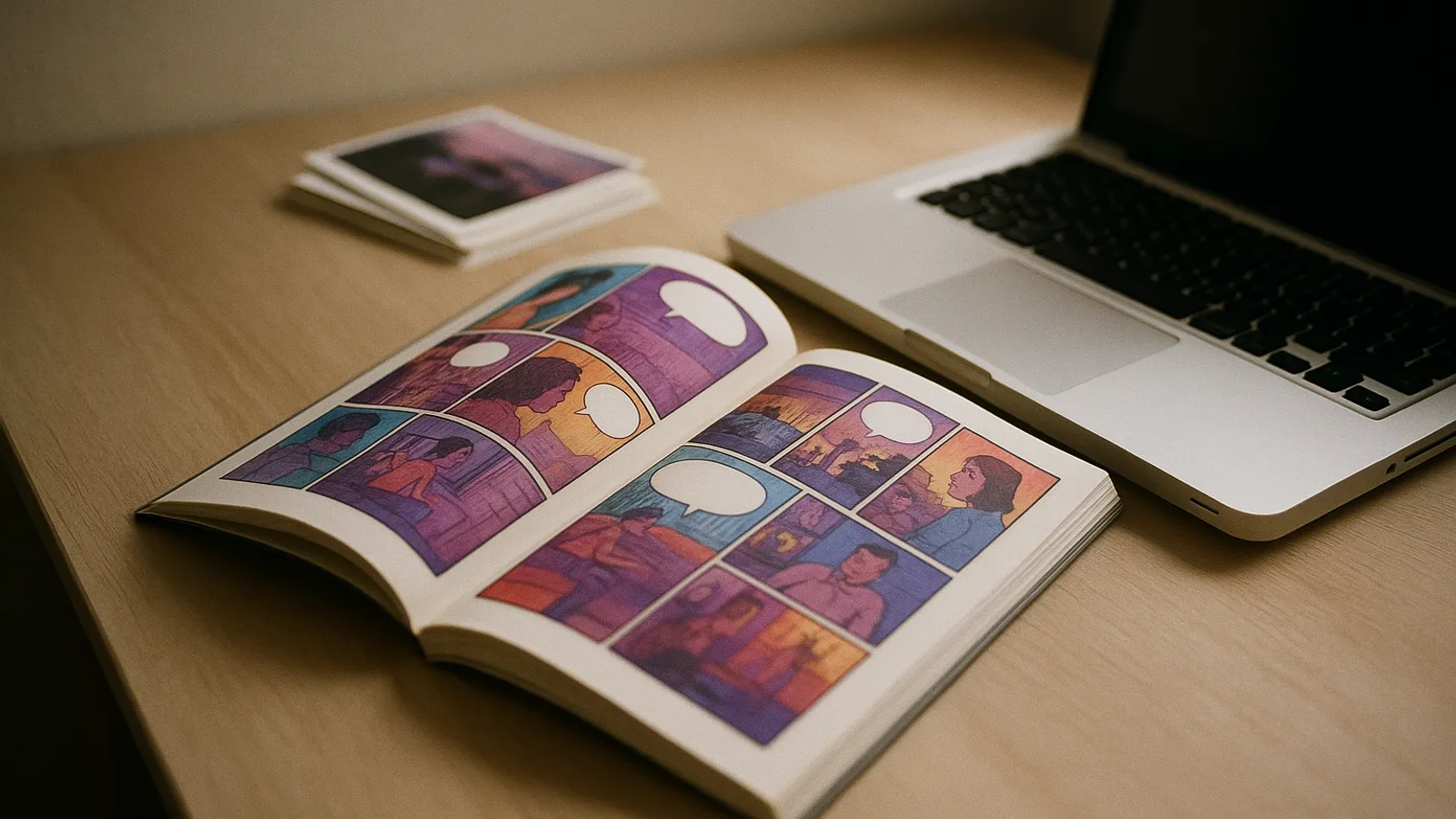
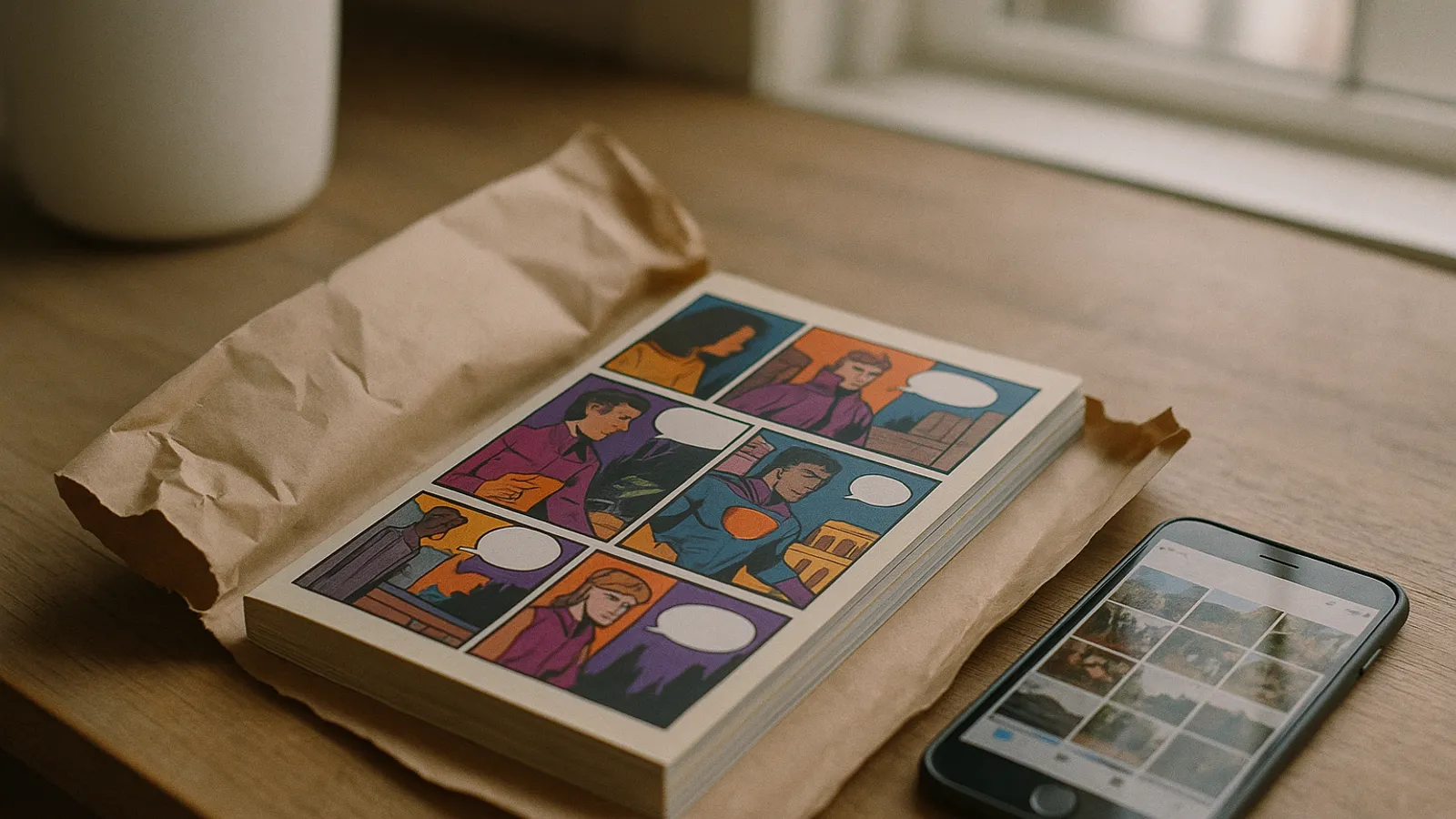
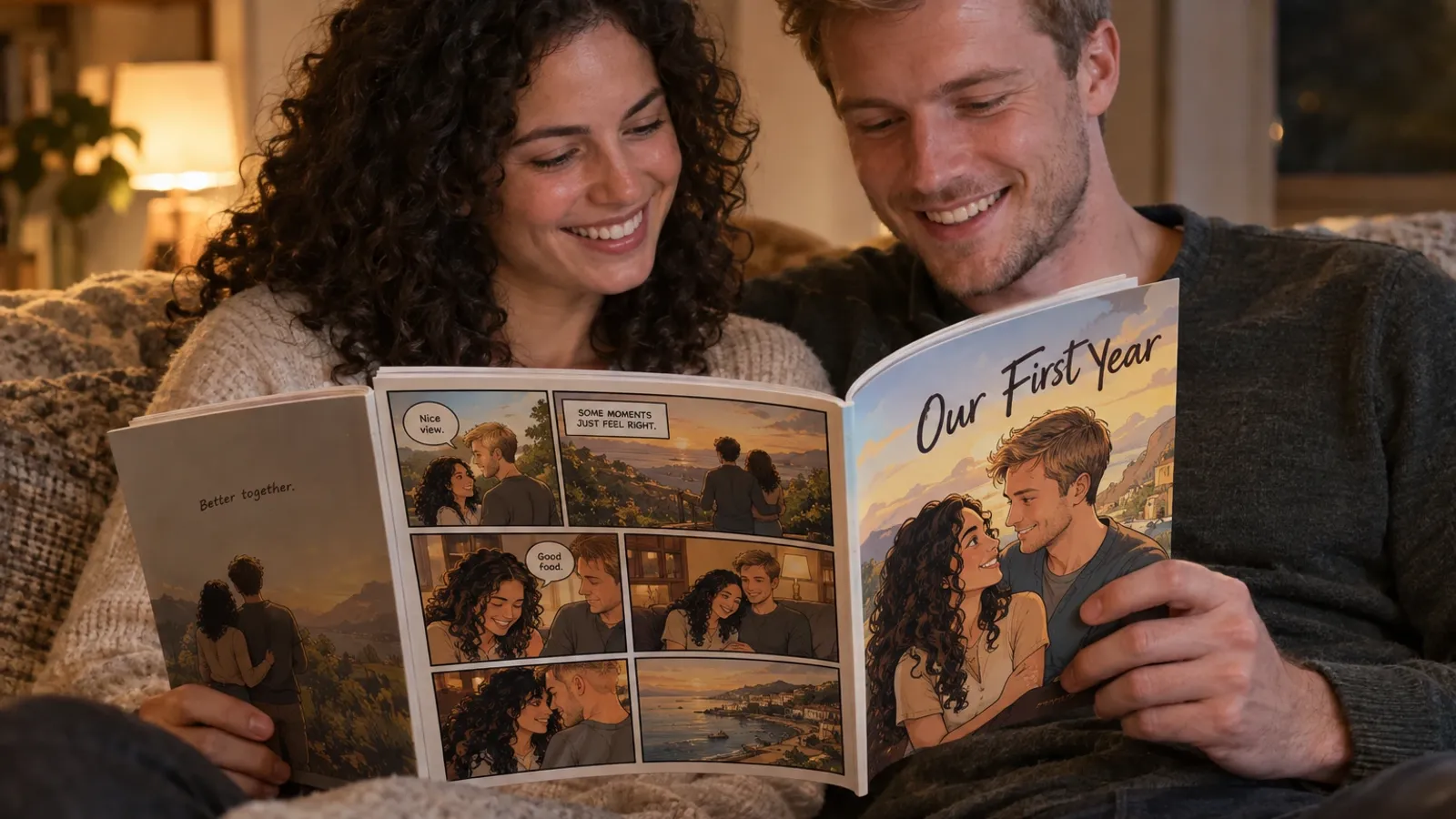
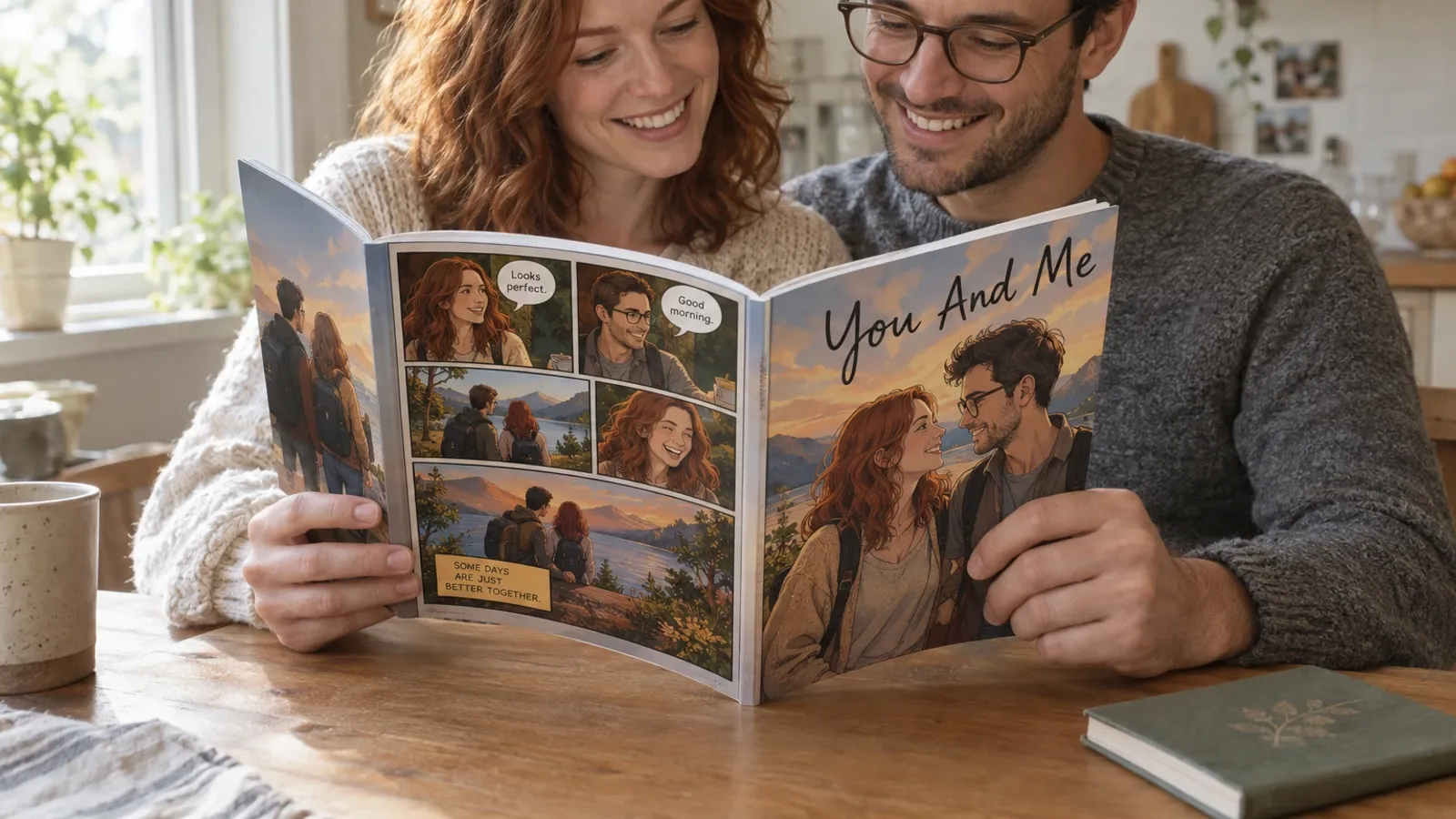
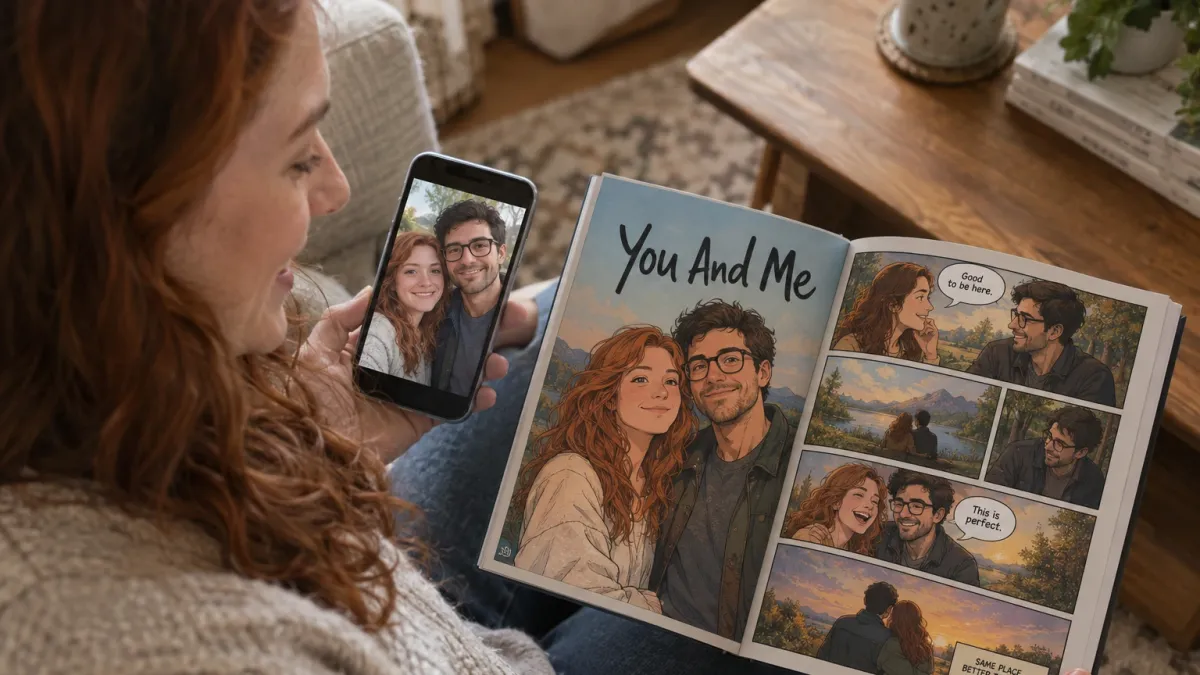
In a personalized comic, the character is generated from photographs. With myComics.ai you upload three to eight pictures of each person, and the product builds a reusable comic character from them — one that holds the same face across every panel while the pose, the angle and the scene change. Nobody picks a jawline from a dropdown. The likeness comes from the photos.
| Reasons-why book | Personalized comic | |
|---|---|---|
| How the character is made | Features chosen from menus | Generated from photos of the real person |
| What the pages are | Pre-drawn layouts you select | A story generated around your premise |
| What you supply | Many short written lines | Photos and one premise |
| What it is good at | Accumulated sentiment | A specific story, retold |
| Output | Printed or digital book | Read online, PDF, or printed book |
Neither column is the upgrade of the other. They are two different objects that happen to share a shelf in the gift aisle.
Which one suits your occasion better?
Run the one-sentence test. Say out loud what the gift is about.
If the sentence is “all the small things I love about you” — the way they make coffee, the way they mispronounce one specific word, how they are with the dog — the reasons-why format is built for exactly that, and a comic would be the harder way to say it.
If the sentence is “the summer everything changed”, or “how we met, properly told”, or “the year you got through the thing nobody saw”, then you have a premise, and a premise wants a story. That is the comic.
A rough sorting:
- Valentine’s Day, just-because, apologies — often sentiment-led. Either format works; the list is quicker.
- Anniversaries and proposals — usually story-led. There is a specific origin to retell, and a couples comic gives it a shape a list cannot.
- Graduations, retirements, big birthdays — almost always story-led, because the whole point is a chapter closing. See graduation comics for that version of it.
- Long-distance friendships, trips, pets — story-led, and often funnier as a comic than as a list.
What do you have to bring to each?
This is where people misjudge the effort, in both directions.
The reasons-why book asks for writing. Not much per line, but a lot of lines, and the quality curve drops fast after the obvious ones. Budget an evening and expect to have a second sitting.
The comic asks for two things. First, photos: three to eight per person, faces clearly visible, varied angles, even light, no heavy beauty filters. That is genuinely the step that decides the result, and it is worth four careful minutes — there is a full walkthrough in how to turn your photos into a comic. Second, a premise: one sentence about what the story is. From there the story unfolds through choices you make as you go, so you are steering rather than composing from a blank page.
If you have the photos, the comic is usually the shorter evening of the two. If you do not — if the person you are making this for is someone you have few clear pictures of — that is a real reason to choose the avatar-based book instead. It does not need photographs at all.
What does a personalized comic do that a reasons-why book cannot?
It puts the person inside a narrative rather than describing them from outside.
That sounds like a small distinction and it is not. A list of reasons is written in the second person: I love how you…. The reader is being told about themselves. A comic is third person: there they are, on page four, in the kitchen of the old flat, saying the thing they always said. The recipient is not being complimented; they are being depicted. People respond differently to the second one, and often more strongly.
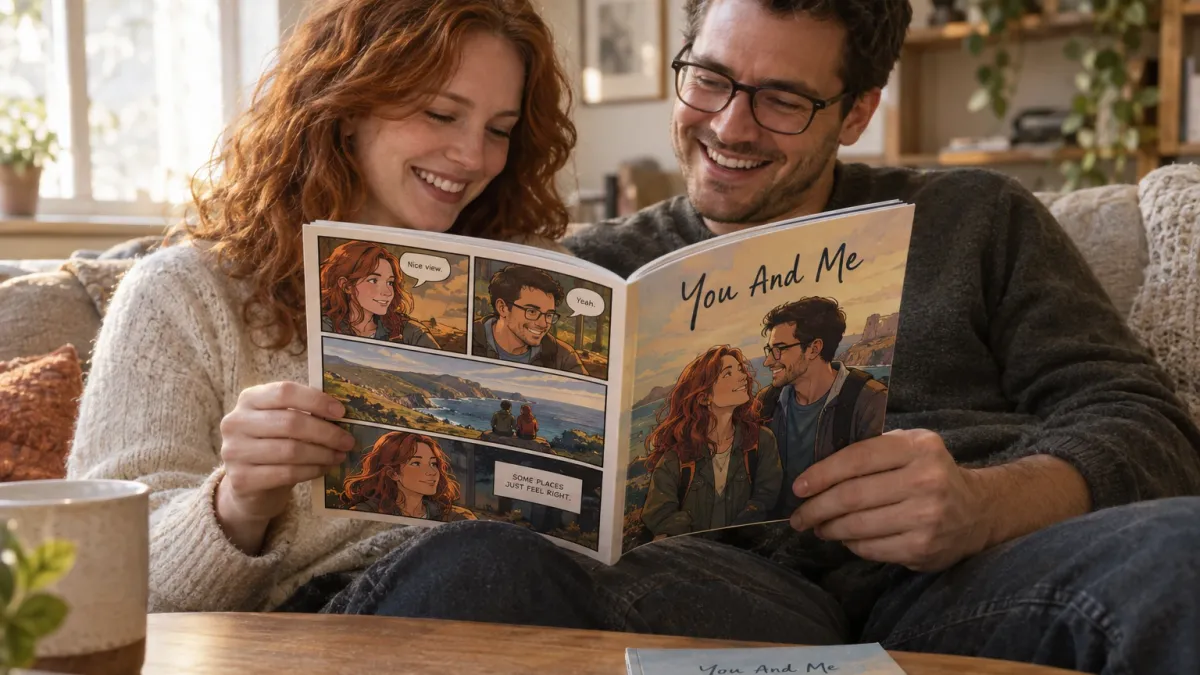
The other thing it does is carry the faces. Because the character is built from photographs and reused panel to panel, the recognition holds across the book — which is exactly the part that makes someone flip back to look again. Faces are the one visual task humans are excellent at, and a likeness that stays put across a dozen panels reads as effort in a way that a matched hair colour does not.
You also get a choice of visual register that a fixed illustration library does not offer. Superhero reads as celebration, so it suits milestones. Manga carries sincerity and comedy equally well. Noir is funny when the subject is deadpan. Cartoon is affectionate and safe for kids and pets. The style is part of what the gift says — pick the one that fits the relationship, not the one that flatters your taste.
Where is the reasons-why book still the better choice?
Worth saying plainly, because a comparison that finds no case for the other product is not a comparison.
Choose the avatar-based book when the sentiment is the gift and there is no single story to tell. Choose it when you do not have usable photos. Choose it when the recipient would be faintly uncomfortable being drawn as a character — some people are delighted to be made the hero of something and some are not, and you already know which one you are buying for. Choose it when you enjoy the writing, because a well-written reasons book by someone who actually wrote it is hard to beat.
And be aware of the one thing both formats share: if you want a physical copy, printing and delivery are the constraint, not the making. Work backwards from the date, leave room for one reprint, and start before that. If the date is too close, give the digital version now and the printed one when it arrives. That works better than rushing print.
How do you decide in five minutes?
Do not read comparison tables, including the one above. Do this instead.
Write your one sentence. If it is a list, you want the list format. If it is a story, keep going.
Then open your photos and find three to eight good pictures of each person. If you cannot, the decision has been made for you. If you can, build one character with them and look at it before you generate a single page — that single step tells you more about whether this gift will land than any amount of reading, and it uses your real photos rather than someone’s marketing samples.
If you want to see how the photo-to-character step works before committing to a story, image to comic is the short version of it, and our roundup of AI comic generators covers what to look for if you are checking more than one tool. What changed in the category this year — and why “template with a name inserted” and “book built from your face” ended up sold side by side — is covered in personalized comic books in 2026.
The short version: LoveBook collects what you feel. A comic shows what happened. Pick the one that matches the sentence you wrote.