Best OC Maker in 2026: 10 Ways to Create an Original Character, Compared
Picrew, Charat, Hero Forge, VRoid Studio, Perchance, ChatGPT, Niji, PixAI and AI OC makers. Ten ways to make an original character, sorted by what you need at the end: an icon, a model, a backstory or a full character sheet.
Last reviewed . Put together from each tool's own pages and documentation, plus our own knowledge of myComics. We make the myComics OC maker, which is one of the ten, so read that section with that in mind. The ordering follows the kind of result each tool gives; it is our editorial judgment, not a benchmark.
By the myComics.ai Editorial Team11 min read
2026 ranking · 10 tools compared · Editorial disclosure
Quick answer
- There is no single best OC maker. Pick by what you need at the end: a profile icon, a 3D model, a written backstory, a polished illustration, or a complete character sheet you can reuse.
- For a quick portrait from artist drawn parts, Picrew or Charat. For a 3D miniature, Hero Forge. For a VTuber style 3D avatar, VRoid Studio. For names and backstories, Perchance or ChatGPT.
- For one beautiful illustration of your OC, Midjourney Niji. For many images of the same OC, a platform where you can train a character model, such as PixAI.
- For a full design board with name, personality, front, side and back views, palette, weapon, moves and powers in one go, and then a comic starring that character, the myComics.ai OC maker, which we make.
- The real test of any OC maker is the second image. If your character cannot be drawn again with the same face and outfit, you have a picture, not a character.
Search for the best OC maker and you get two kinds of results that have almost nothing in common. On one side are dress up makers like Picrew, where you click through eyes, hair and outfits an artist has drawn. On the other are AI generators that will draw anything you type. Both are called OC makers, and both leave many people with the same problem: a nice picture of a character they cannot draw a second time.
So this comparison is organised by what you need at the end. We make myComics.ai, whose OC maker is one of the ten below, and we have said plainly where the others are the better choice. If you are mostly after anime images, our comparison of AI anime generators goes deeper on that side.
What is an OC maker?
An OC maker is any tool that helps you design an original character: a character you invent rather than borrow from an existing story. In practice the name covers five quite different products.
- Avatar and dress up makers like Picrew and Charat let you assemble a portrait from parts drawn by an artist. Fast, charming and limited to what the artist drew.
- 3D character creators like Hero Forge and VRoid Studio build a model you can rotate, print as a miniature or use as an avatar.
- Text generators like Perchance and ChatGPT write the name, personality and backstory, with little or no art.
- AI image generators like Midjourney Niji and PixAI draw your character from a description, sometimes from a reference image too.
- Character sheet makers produce the full design document: name, personality, views from every side, palette, details and gear, which is what artists use to keep a character consistent. The myComics OC maker sits here.
Most people actually want the last thing and start with the first, which is why so many OC folders are full of portraits and empty of characters.
How did we compare the OC makers?
Five questions, chosen because they are where OC makers really differ.
Where do you start? Clicking through presets, typing an idea, or uploading your own sketch or photo.
What do you get? A portrait, a 3D model, a block of text, an illustration, or a full sheet.
Can you draw it again? Character consistency is the whole point of an OC. A tool that gives one image and no way to reproduce it is a sketchbook, not a character designer.
Does it give the character a life? Name, personality, backstory, powers. Some tools only care about the look.
What can you do with it next? Use it as a profile picture, print a miniature, stream as it, write it, or put it in a comic.
We left prices out of the ranking. Plans change every few months, and each tool’s own pricing page is the only reliable source.
Which OC makers made the list?
The short version first.
| Tool | Type | Start from | You get | Same character again | Story and personality |
|---|---|---|---|---|---|
| Picrew | Avatar maker | Artist presets | Portrait | Yes, same parts | No |
| Charat | Avatar maker | Presets | Portrait or full figure | Yes, same parts | No |
| Hero Forge | 3D miniature creator | Presets | 3D model, miniature | Yes, saved model | No |
| VRoid Studio | 3D anime avatar | Presets and sliders | 3D avatar | Yes, saved model | No |
| Perchance | Text and image generators | Text | Backstory, simple images | Text only | Yes |
| ChatGPT | Chat assistant with images | Text or image | Backstory and images | Within one conversation | Yes |
| Midjourney Niji 7 | AI image generator | Text or image | Illustrations | With references | No |
| PixAI | Anime image platform | Text or image | Illustrations | Trained character model | No |
| Dedicated AI OC maker sites | AI image tools | Text or image | Character images | Varies | Varies |
| myComics.ai OC maker | Character sheet maker | Text, image or both | Sheet and design board, then a comic | Board as reference, same face in comics | Yes |
The order runs from preset makers to full character sheets. It is not a ranking of art quality.
1. Picrew: the classic portrait maker
Picrew hosts thousands of image makers, each built by an artist who drew a set of layered parts: faces, eyes, hair, clothes, accessories. You pick a maker whose style you like and mix its parts into a portrait. It is where many people make their first OC icon, and the art is hand drawn, which shows.
Choose it if you want a cute portrait or profile icon in a few minutes, in a style a real artist designed. Look elsewhere if your character has a feature the artist never drew, or you need full body art, other angles or a backstory. Each maker has its own usage terms, and many forbid commercial use.
2. Charat: dress up with a full figure
Charat is a long running Japanese dress up maker in the same spirit as Picrew, with a house anime style and options for full figure characters as well as portraits.
Choose it if you want a full figure anime OC from presets with a consistent, polished style. Look elsewhere if you need something the preset library does not cover or want your character to do more than stand and smile.
3. Hero Forge: for tabletop characters you can hold
Hero Forge is a 3D character creator built for tabletop players. You pose and dress a figure in the browser, then order it as a printed miniature or buy the file.
Choose it if your OC lives in a D&D or other tabletop campaign and you want it on the table. Look elsewhere if you want illustrated art or anime styling; this is a sculpted miniature look.
4. VRoid Studio: for VTubers and 3D anime avatars
VRoid Studio is a free 3D character creator from pixiv for anime style avatars. You shape the face, hair and outfit with sliders and painting tools, and export a model that works in many VTuber and avatar apps.
Choose it if you want to stream or appear in virtual spaces as your OC. Look elsewhere if you want flat illustrations or comic pages, and set aside an evening: the results are excellent once you learn the hair tools.
5. Perchance: free random generators for names and backstories
Perchance is a platform of community made random generators, including many for characters: names, personalities, backstories, and AI image generators as well. It is popular with writers and roleplayers who want a spark rather than a finished design.
Choose it if you are stuck on who your character is and want ideas fast. Look elsewhere if you need a consistent visual design; the text and the images do not know about each other.
6. ChatGPT: talk your character into existence
Many people now build OCs in a conversation: describe a vague idea, ask for a name, a backstory and a list of powers, then ask for an image. ChatGPT is good at the talking part and can redraw a sketch or photo you upload.
Choose it if you think best by talking an idea through. Look elsewhere if you need the same character across many images. Consistency depends on the conversation remembering the design, and across a longer series the face and outfit tend to drift.
7. Midjourney Niji 7: for the most polished illustration
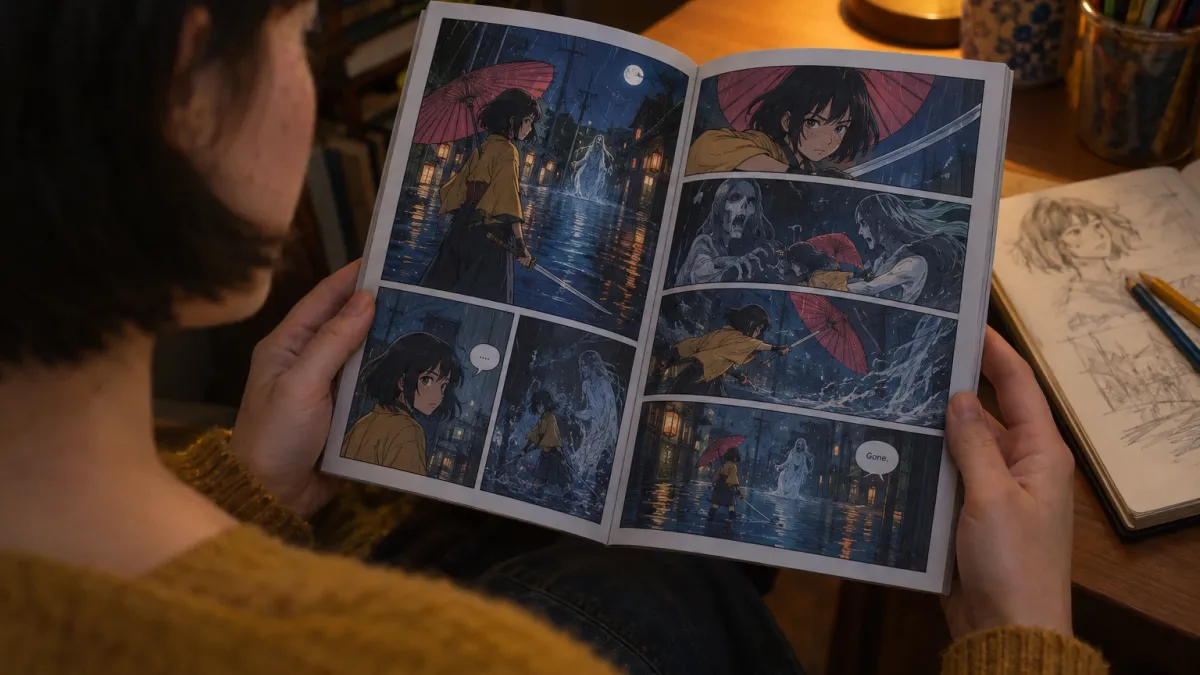
Niji is Midjourney’s anime model. Niji 7 arrived in January 2026 with better coherence and improved style references, and for a single striking image of your OC it is the benchmark many artists compare against.
Choose it if you want key art for your character: a wallpaper, a cover, a profile banner. Look elsewhere if you need a reproducible design. You can hold a look roughly steady with references, but views from every side and a stable outfit take real effort.
8. PixAI: train your character once, reuse it
PixAI is an anime focused platform built around community models, and it lets you train your own LoRA, a small model of one character, so it keeps its face and outfit across many images.
Choose it if you plan to make dozens of images of the same OC and do not mind a setup step. Look elsewhere if you have no images of your character yet. Training needs a consistent set to learn from, which is exactly what a character sheet gives you.
9. Dedicated AI OC maker sites
A wave of sites now sell themselves as AI OC makers, usually with “OC maker” in the name. Most are image generators with character presets, often bundled with editing or short video tools. Some are good, and several of the “best OC maker” rankings you will find are written by the tools themselves, so judge them on a test rather than a list.
Choose one if you find one whose style you like and it passes the test at the end of this article. Look elsewhere if it gives you a single image and no way to get the same character again.
10. myComics.ai OC maker: a full character sheet, then a comic
This one is ours, so we will stick to facts. The myComics OC maker starts from a line of text, a full backstory, a reference image such as a photo or a sketch, or both. It first writes a character sheet: name and alias, archetype, setting, age, appearance, personality, a quote, six detail shots, a signature weapon or item, three combat moves, five abilities and a five colour palette.
Then it draws one design board from that sheet, laid out like the sheets studios give their artists: portrait, name and quote, full body, front, side and back views, details, palette, weapon, combat panels and ability cards, in a manga and anime concept art look. It takes about a minute. Seeing the board needs a free account, and your first OC is free.
The difference is what comes next. myComics is a comic generator first, so you can put the same character into a full comic: give it a premise in one sentence, and the story, panels and dialogue are written for you with the same face and look from the cover to the last page. Every speech bubble can be rewritten and any page regenerated with an instruction.
Choose it if you want your OC designed as a complete, reusable character with a personality and powers, and especially if you want to see it in a story. Look elsewhere if you want a cute icon from an artist’s parts (Picrew), a 3D avatar (VRoid Studio), a miniature (Hero Forge) or total control of every line, which still means drawing it yourself or commissioning an artist.
What makes a good OC sheet?
Whatever tool you use, the sheet is what turns a picture into a character. A useful one has:
- A name and one line hook. “A blind swordswoman who hunts ghosts in a flooded Tokyo” tells you more than a paragraph of adjectives.
- Full body and turnaround views. Front, side and back, in the same outfit. Without the back you will invent it differently every time.
- A small palette. Four or five colours you can name. Palette is what readers recognise first, before the face.
- Close ups of details. Eyes, an earring, a tattoo, an emblem, anything small that gets lost in a full body view.
- A signature item and a few moves. What they carry and how they fight or act tells you how they move in a scene.
- A personality and a quote. One line only this character would say keeps the writing as consistent as the art.
The anime styles guide in our anime comics article helps if you are still deciding how your OC should look on the page.
How do you write a good OC prompt?
Most weak OCs come from a list of looks without a person underneath. Three habits help in any AI tool.
Give it a contradiction. A retired dragon knight who now runs a tiny ramen shop. A shy necromancer who only raises animals and apologises to them. The tension is what makes a character memorable, and it gives the tool something to design around.
Say what they want. Revenge, a cure for a sister, a quiet life. Motivation shapes posture, expression and costume more than you would expect.
Leave room. You do not need to specify every button. Fix the two or three things that matter (the umbrella that becomes a blade, the red scarf) and let the tool fill the rest, then adjust.
If you already have a face in mind, a reference image beats any description: a sketch, a photo of yourself or existing art of the character. Our guide to the AI anime generator covers how photo to anime works if you want an OC based on you.
How should you test an OC maker before committing?
Every tool shows its best output in its gallery, ours included. A twenty minute test tells you more.
- Use your real idea, not an easy prompt. If your character has a prosthetic arm and two colours of hair, ask for that.
- Ask for the back view. It is where invented designs fall apart.
- Ask for the same character in a new scene and compare the face, the outfit and the palette with the first result.
- Put your OC next to a second character and check that neither changes.
- Read the terms on downloads and commercial use before you build a project on the result.
So which OC maker should you use?
Match the tool to what you need at the end. For a quick portrait or profile icon, Picrew or Charat. For a miniature on the table, Hero Forge. For a 3D avatar to stream as, VRoid Studio. For names and backstories, Perchance or ChatGPT. For one polished illustration, Midjourney Niji, and for many images of the same character, a trained model on PixAI.
And if what you want is the complete character, with a name, a personality, views from every side, a palette, a weapon and powers on one board, then that same character in a real story, that is the job we built the myComics OC maker for. Try it on the OC maker, and when your character is ready, the AI comic generator gives it a plot. If you are comparing comic tools as well, our roundup of the best AI comic generators covers the wider field.